
Garage door sensor repair · Stamford, CT
Garage Door Sensor Repair
Door won't close or keeps reversing? Describe it once and get connected with a local contractor who handles sensor problems on Stamford garage doors.
- One call, one local contractor
- Calls answered around the clock
- You decide after you talk
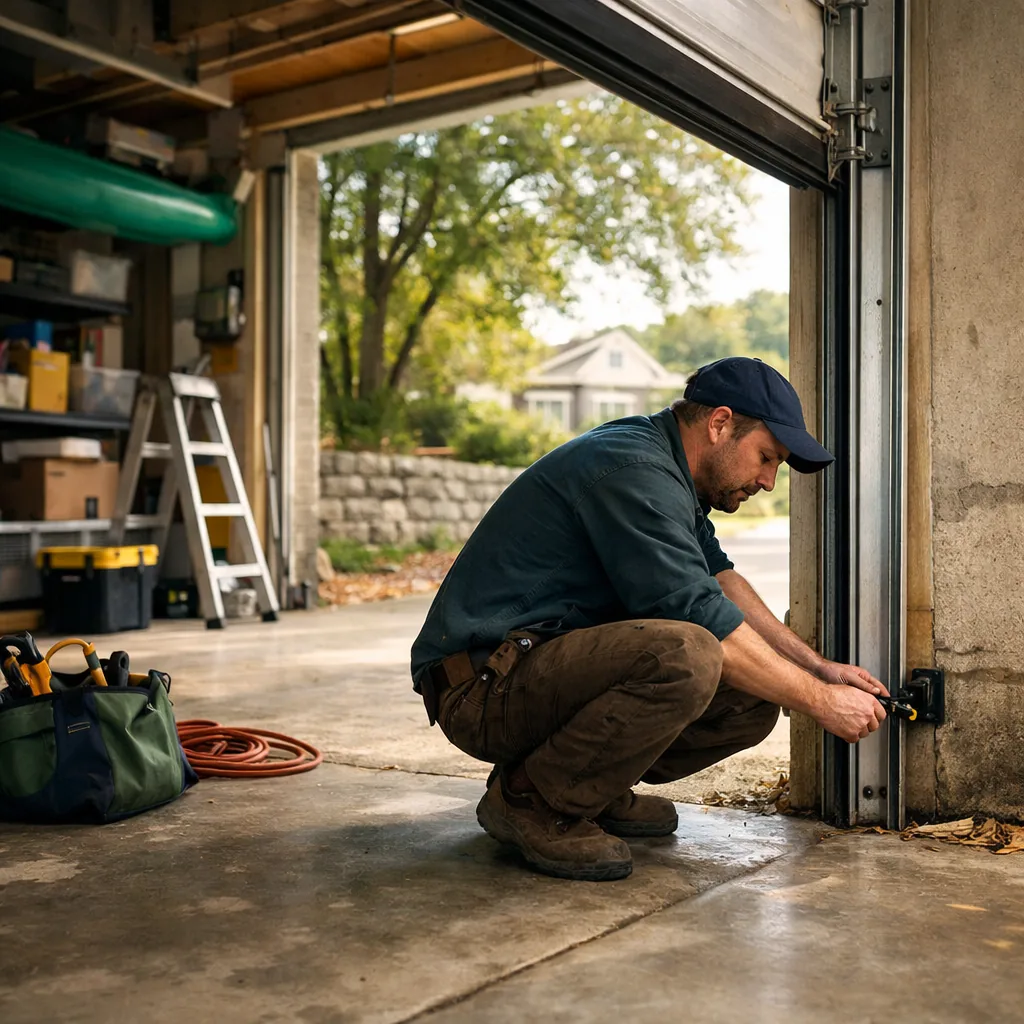
Photo eyes and the safety beam
Why a garage door stops closing: the safety sensors
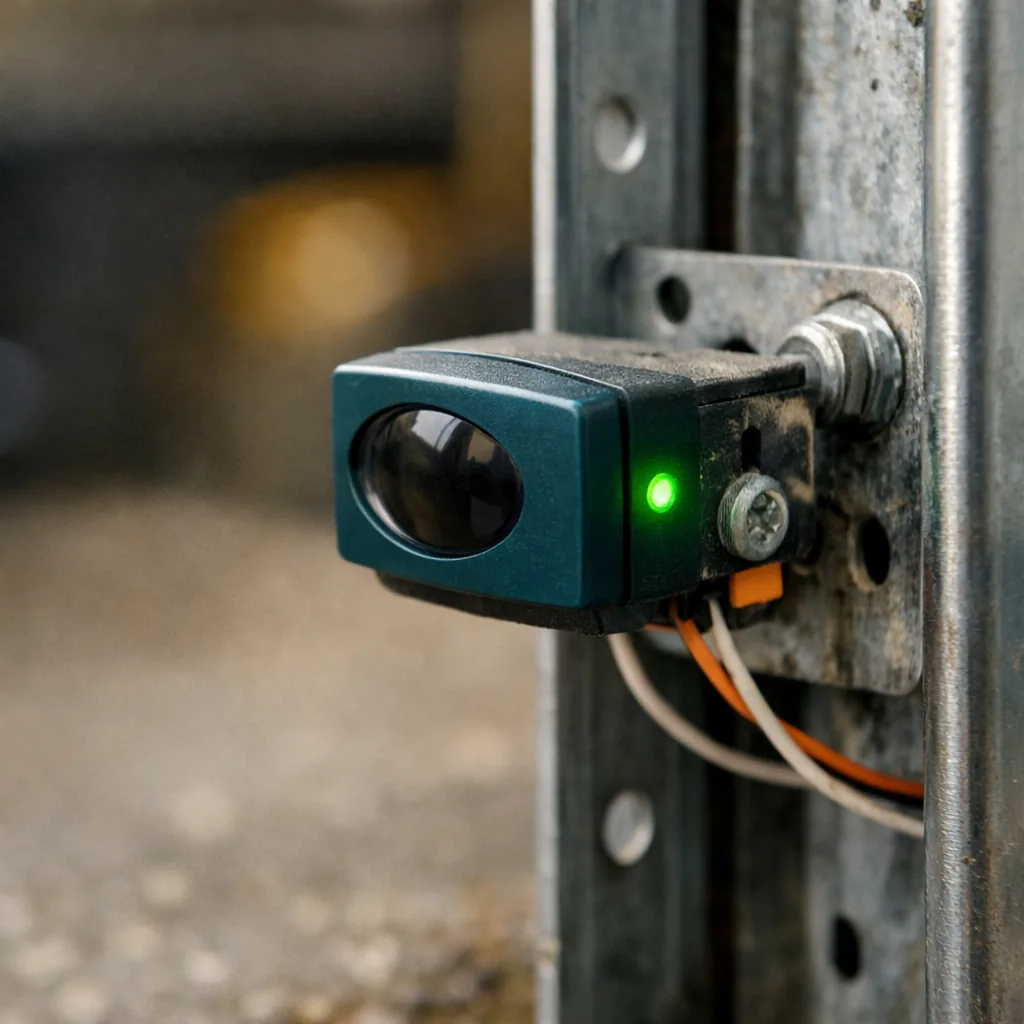
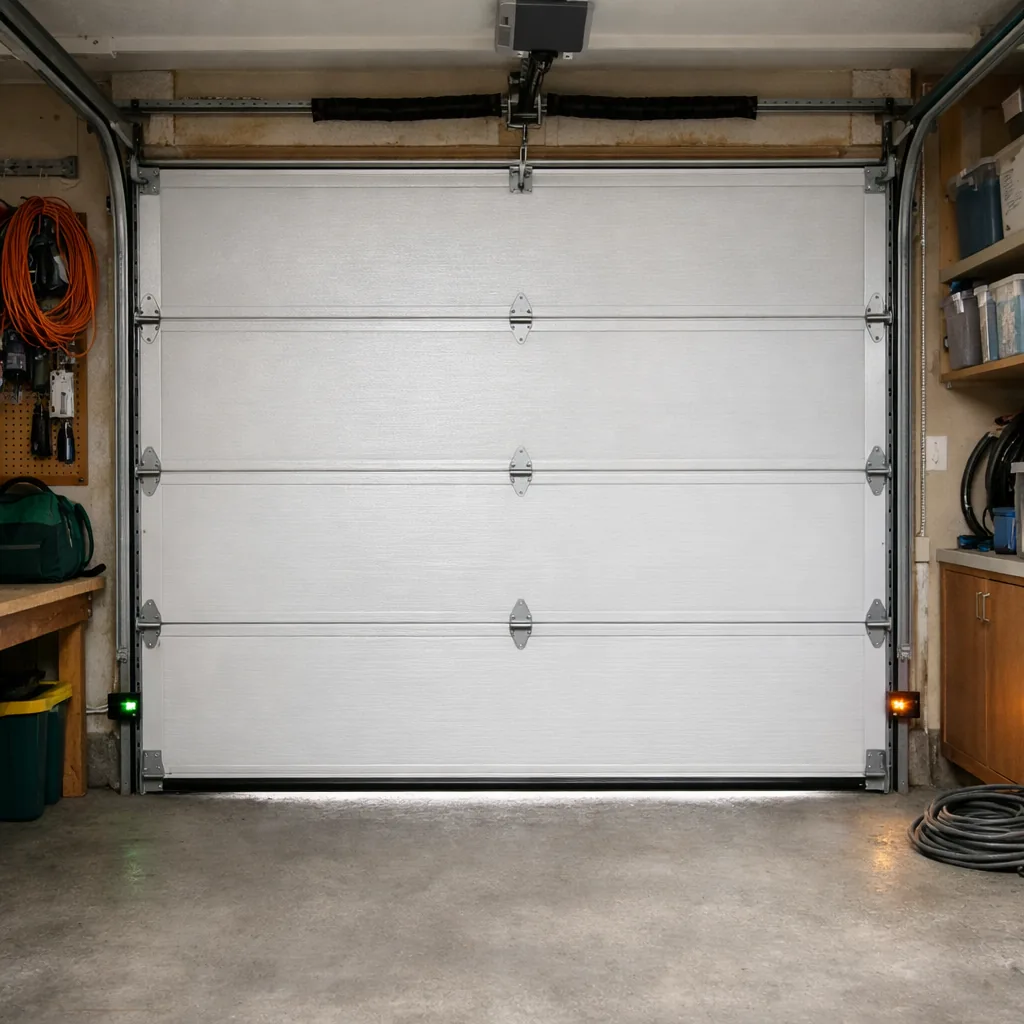
Garage door sensor repair is usually the fix when the door starts down, stops, and goes back up. Every opener sold in the United States since 1993 has to carry a pair of photo eye sensors, one on each side of the door, mounted about 4 to 6 inches off the floor. The sending eye shoots an invisible infrared beam across the opening to the receiving eye. If anything breaks that beam, the opener reverses the door instead of closing it on a child, a pet or a bicycle wheel.
When the sensors stop doing their job, the symptoms are easy to spot. The opener lights blink but the door will not close. The door closes only when you hold the wall button down. One of the two indicator lights on the eyes is dark or flickering. The usual causes are a bracket knocked out of line by a bumped bin or a lawnmower, a wire pinched or chewed along the wall, a cracked lens, or sunlight hitting the receiving eye at a low angle in the morning or evening. Winter in Fairfield County adds road salt and moisture tracked into the garage, which loosens connections and clouds the lenses over time.
A sensor problem also looks like an opener problem, and the two get confused often. If the motor runs normally and the door only refuses to close, the sensors are the first thing a good contractor checks, before anything touches the opener itself. If the motor hums and nothing moves, that is a different job, and opener repair is the better starting point.
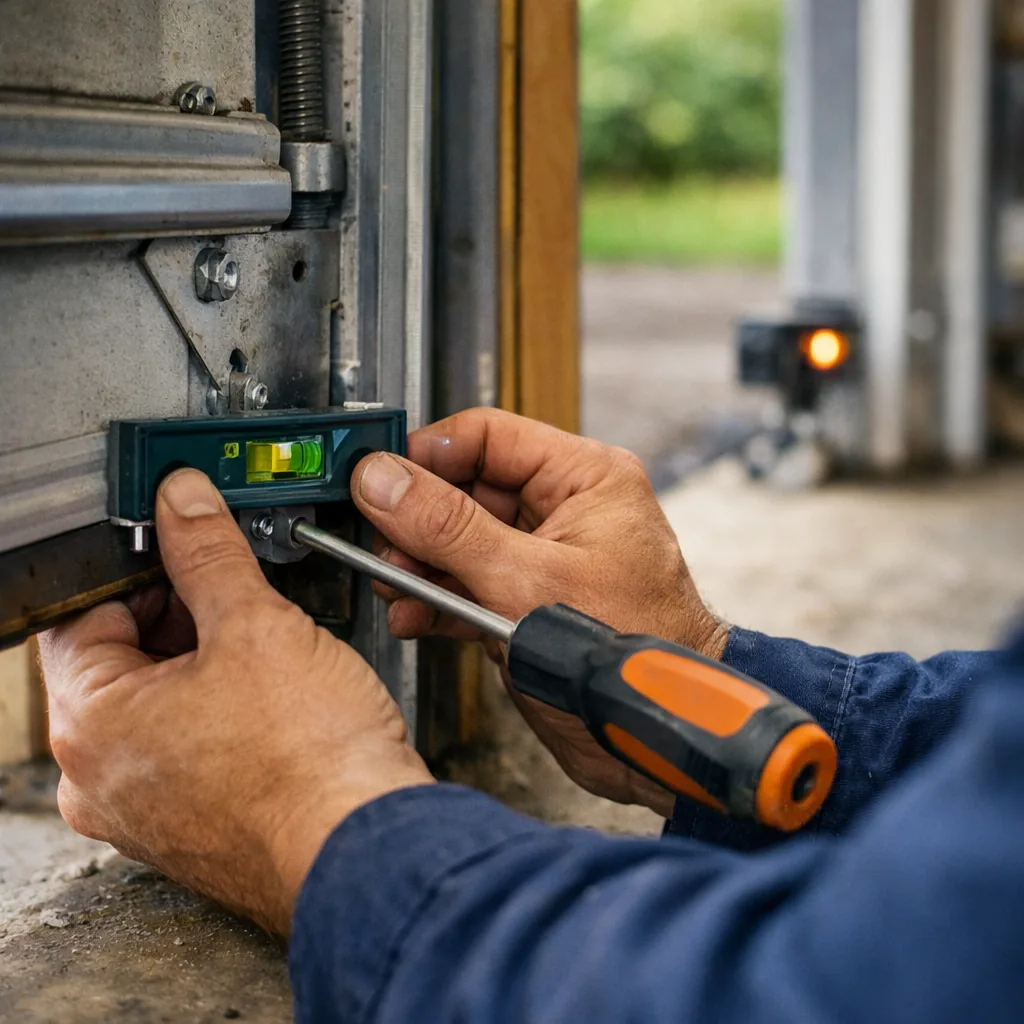
Diagnosis · Eyes, lenses and wiring
What a contractor checks first on a sensor repair
Alignment of the two eyes
The sending and receiving eyes have to face each other directly. A bracket bent by a bump, or a loose mounting screw, is the most common reason the beam misses. The contractor re-aims the eyes until both indicator lights hold steady.
Lenses and sunlight
Dirt, spider webs and condensation on the lens can block the beam. So can direct sun on the receiving eye. Cleaning the lens or adding a small shade is sometimes the whole repair.
Wiring back to the opener
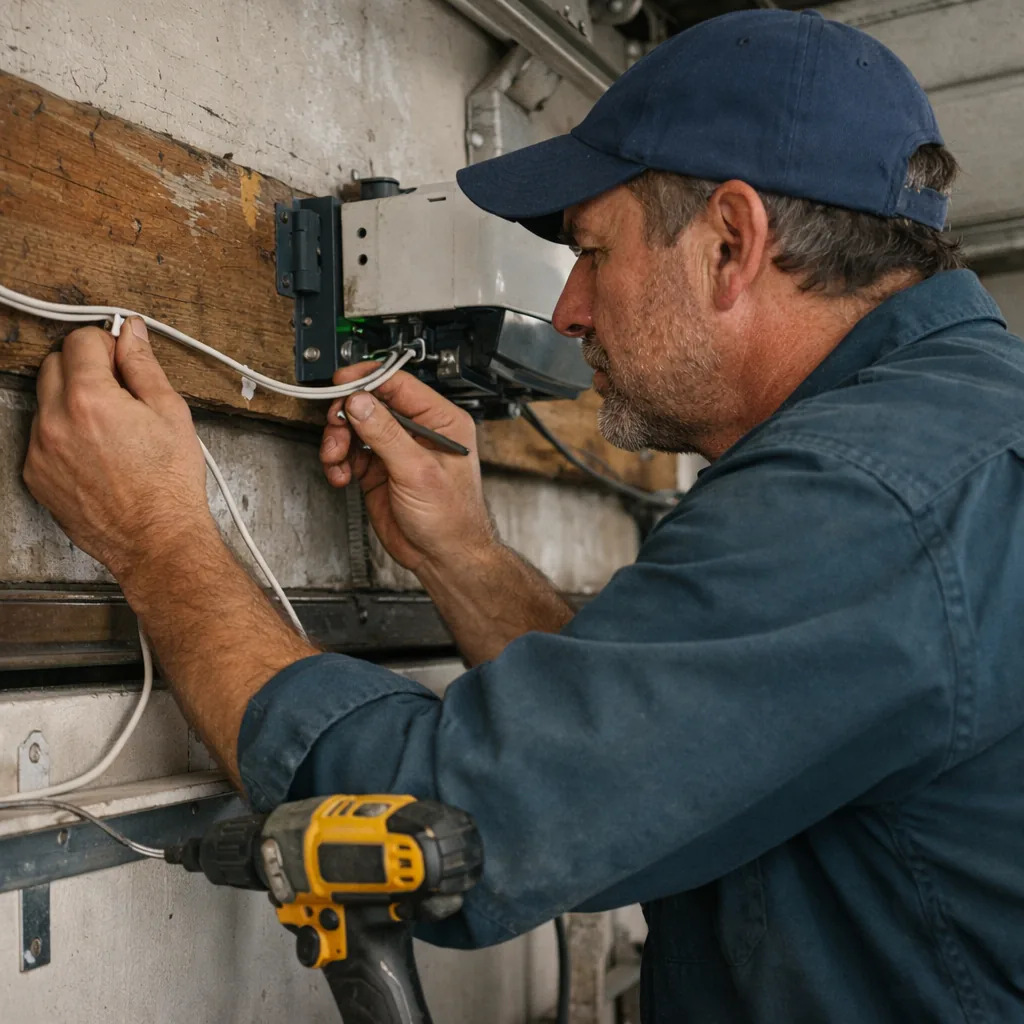
Sensors run on low voltage wire stapled along the wall to terminals on the back of the opener. A wire pinched by a staple, cut by a stored item or corroded at the terminal screw breaks the signal even when the eyes are fine.
Sensor replacement
When an eye is cracked, dead or no longer lights up, it gets replaced. Eyes are made for specific opener brands and generations, so garage door sensor replacement, including Genie garage door sensor replacement, starts with the opener's model label so the new pair matches.
The opener's logic board
If new sensors with good wiring still do nothing, the terminal or board in the opener may be at fault. A contractor will tell you whether a board repair makes sense or whether the opener has reached the end of its life.
How it works
How getting connected works for a sensor repair
-
01
Pick up the phone
The call is answered around the clock. There is no form to fill out and no email to wait on.
-
02
Describe the problem once
Say what the door does: reverses, won't close, blinks the opener light. Mention the opener brand and the age if you know them. A Genie, Chamberlain or LiftMaster label is on the motor housing.
-
03
A local contractor takes the job
We connect you with an independent contractor who works in Stamford and nearby Fairfield County towns and handles sensor and opener work regularly.
-
04
You decide
You speak to the contractor directly. The quote and the work come from the contractor, and you choose whether to go ahead.
A door that won't close is a door that leaves the garage open overnight.
Describe what it is doing and get connected with a local contractor who fixes sensors.
On the job in Stamford garages
Sensor repair in practice
Before you pick up the phone
Garage door sensor questions
How do I tell if the sensors are the problem and not the opener?
Can I just bypass the sensors to get the door closing?
Does a Genie opener use different sensors from other brands?
What should I have ready when I call?
Who gives me the quote and does the repair?
Door won't close? Get the sensors looked at.
Describe the problem once and get connected with a local contractor who can find out why the beam isn't reaching the other side. If the trouble goes deeper, they can tell you whether it needs a garage door repair beyond the sensors.