
Garage door roller replacement · Stamford, CT
Garage Door Roller Replacement
A loud, shaky or sticking door usually has worn rollers. Describe it once and get connected with a local contractor who swaps them out.
- One call, one local contractor
- Calls answered around the clock
- You decide after you talk
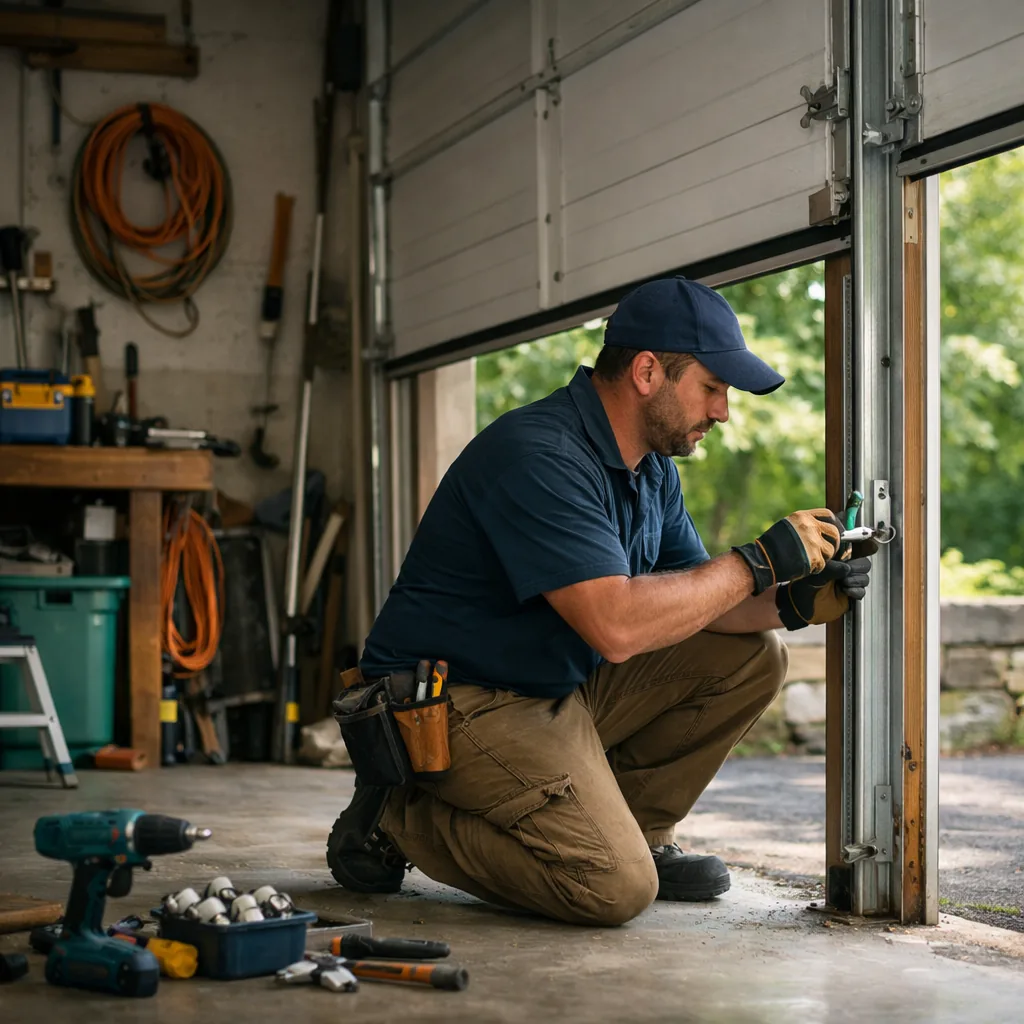
Rollers, hinges and tracks
What garage door roller replacement involves
Garage door roller replacement is one of the more common repairs on a door that has been in use for years. Each roller is a small wheel that sits in a hinge and rides inside the track, carrying the door up and down. A residential door has a roller at each hinge on both sides. Standard rollers are steel or nylon, and they wear out from thousands of cycles, dried grease and weather.
The signs are easy to hear. A grinding or rattling noise as the door travels, a shaky or jerky motion, a door that sticks partway up, or a roller that has fallen out of the track entirely. Worn rollers also put extra strain on the opener, which has to push the door through the rough spots. Replacing them early protects the opener and the tracks.
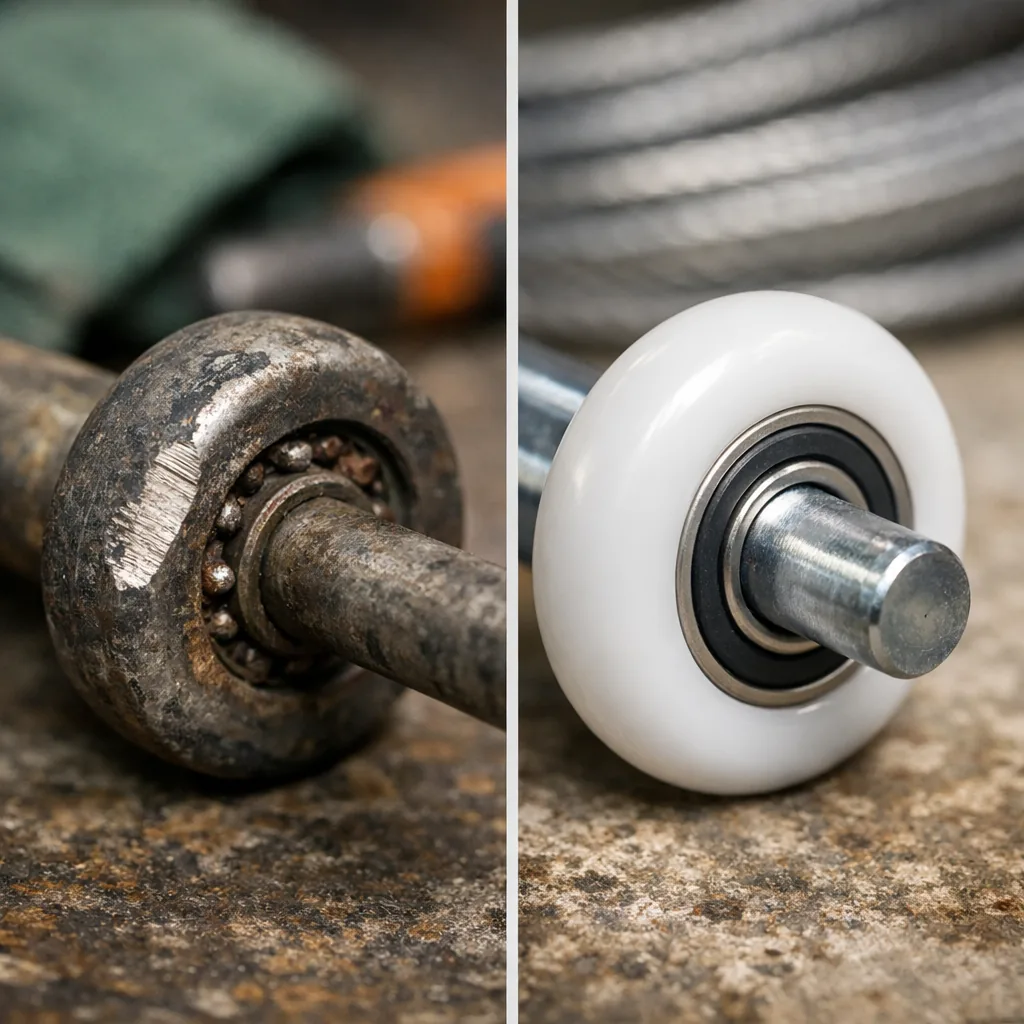
There are two main roller types. Steel rollers are standard and hold up to heavy doors, but they are louder. Nylon rollers with sealed ball bearings run quieter, which matters in Stamford homes where the garage is attached and shares a wall with a bedroom or living space. A contractor will tell you which fit your door's track and hinges. The bottom roller sits in a fixed bracket tied to the lift cable and is not swapped by the homeowner, because that bracket is under spring tension.
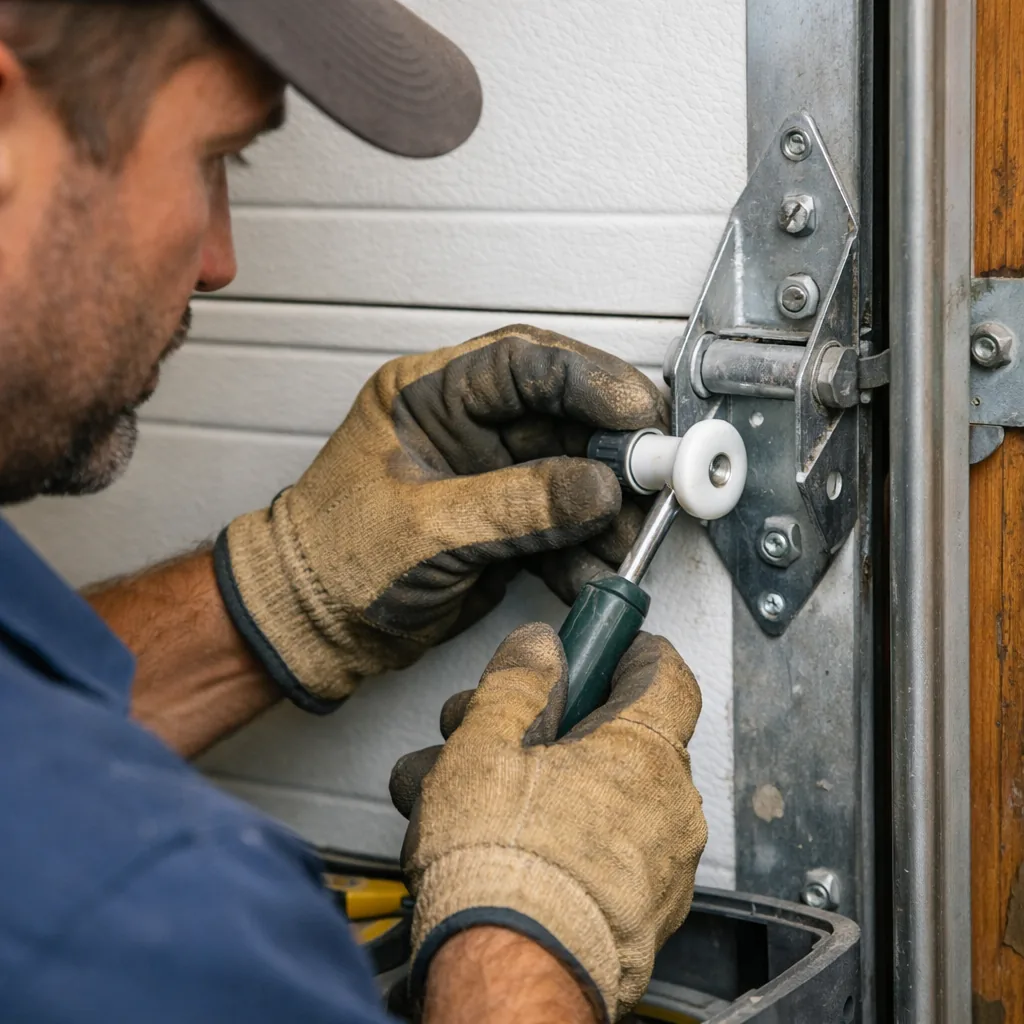
Diagnosis · Fit, tracks and balance
What a contractor checks when replacing rollers
Roller type and stem size
Rollers come with different stem lengths and wheel diameters, typically 2 inches for most residential doors. The contractor matches them to the existing hinges and track.
Track condition
Bent, dirty or misaligned tracks wear new rollers quickly. The contractor checks alignment and cleans the track before the new rollers go in.
Hinges and brackets
A cracked hinge or loose bracket can let a new roller wobble. Damaged hinges are replaced with the rollers.
Spring balance
A door that is out of balance strains the rollers and the opener. A contractor checks balance as part of the visit and may suggest spring repair if the springs are weak or worn.
Lubrication
Springs, hinges and bearings are lubricated after the work. Lubricating nylon rollers themselves is generally not needed.
How it works
How getting connected works
-
01
Pick up the phone
Calls are answered around the clock. There is no form to fill out.
-
02
Describe the noise and the door
Say what you hear, whether the door sticks or shakes, and whether any roller has come out of the track. Mention the door type if you know it.
-
03
A local contractor takes the job
We connect you with an independent contractor who works in Stamford and nearby Fairfield County towns and handles door repair regularly.
-
04
You decide
You speak to the contractor directly, get the quote from them and decide whether to book.
A grinding, shaking door is telling you something.
Describe it once and get connected with a local contractor who replaces garage door rollers.
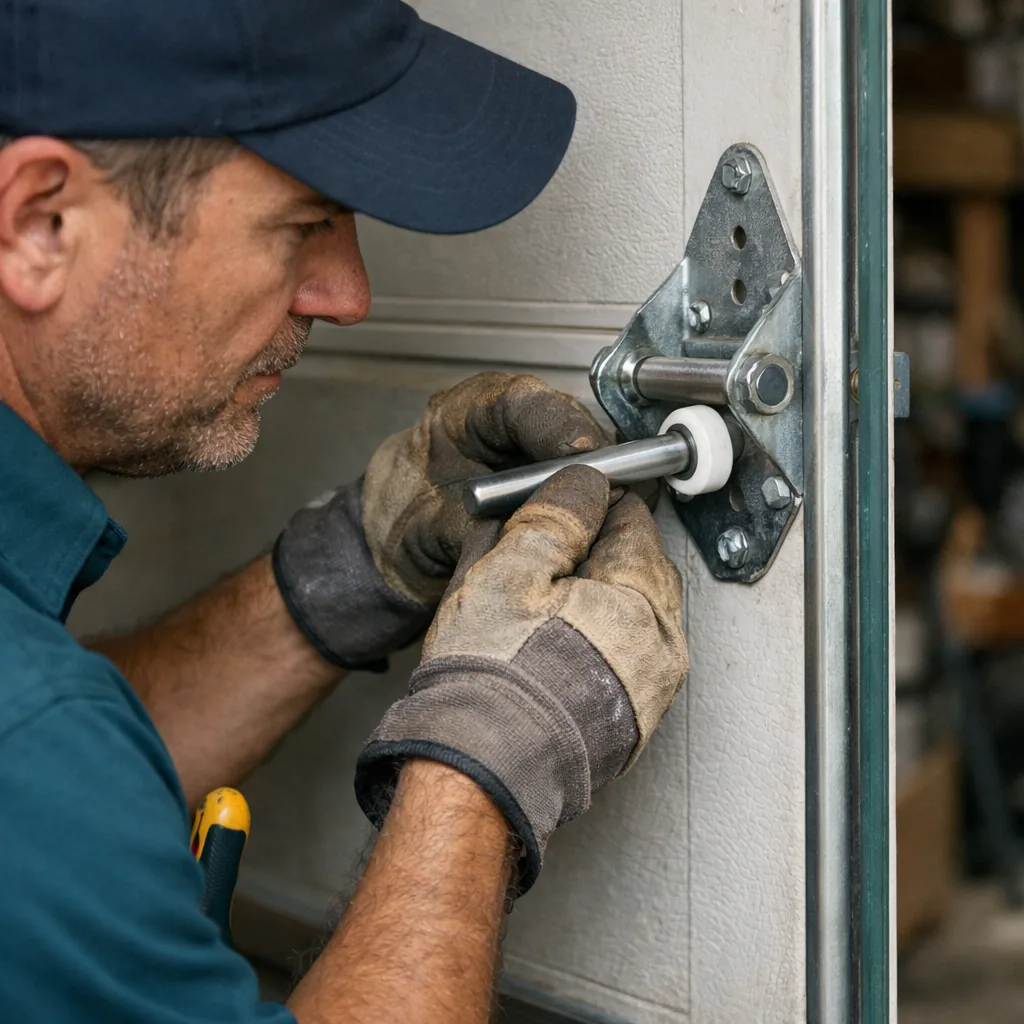
On the job in Stamford
Roller replacement in practice
Before you pick up the phone
Garage door roller questions
How do I know the rollers are worn rather than something else?
Are nylon rollers better than steel?
Can I replace the rollers myself?
What should I have ready when I call?
Who provides the quote?
Ready to quiet the door down?
Describe what you hear once and get connected with a local contractor. If the rollers are only part of the story, they can speak to your wider garage door repair needs on the same call.